CURRENT

ARCHIVES

ITUNES U

STAFF


Friday
Nov042011

UA Documentary to Screen in Rome

“Richard Johnston: Hill Country Troubadour,” a documentary from the University of Alabama Center for Public Television and Radio, will be shown in Rome, Italy as a part of the 7th annual Mojo Station Blues Festival. The three day festival features performances by blues musicians and films on blues related subjects.

The Mojo Station radio program was created by Gianluca Diana and Pietropaolo Moroncelli in 2002 to celebrate and promote blues music in Italy. The program led to the creation of the Mojo Station Blues Society, a non profit organization, which established the Mojo Station Blues Festival in 2005. Each year the festival brings live blues music and documentary films to an appreciative audience in Rome.

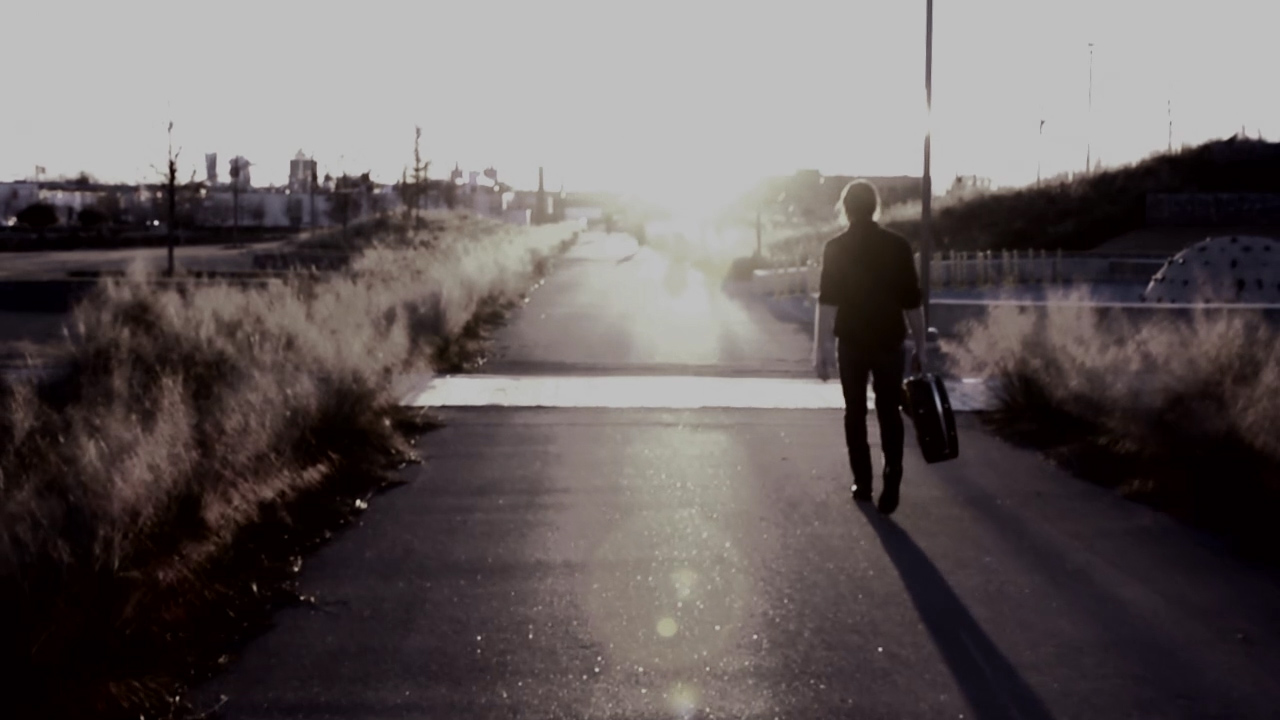
“Richard Johnston: Hill Country Troubadour” will screen on Friday, November 4th at the Cinema Palazzo. The film film tells the story of a Memphis, Tennessee based musician who draws his inspiration from the hill country style of music from north Mississippi. Johnston is a popular performer at venues around the world but at the time the documentary was shot, he was performing primarily on the sidewalk along Beale Street in Memphis. The documentary has been screened at film festivals across the US and Europe and has won five festival awards. It was produced and directed by Max Shores.

For more information:
The Mojo Station Program Podcast

Richard Johnston: Hill Country Troubadour
(info about the film)


Monday
Oct242011

Bookmark with Susan Gregg Gilmore

Susan Gregg Gilmore's southern roots are evident in her two novels, Looking for Salvation at the Dairy Queen and The Improper Life of Bezellia Grove. While many Southern novelists claim Lee Smith's influence, Gilmore is the sole Bookmark guest who can claim Smith for seventh grade English. "She taught us we all had a story," Gilmore said.
NPR's Alan Cheuse said Gilmore's first novel was a "stand-out coming of age novel. Her second was part of TARGET’s Emerging Author Program. Special thanks go to Jacksonville State University for hosting Bookmark at its annual literary conference On the Brink and Gena Christopher for her generosity.

Tuesday
Oct182011

Bookmark with Darnell Arnoult

When author Darnell Arnoult was celebrated by Northeast Alabama Community College's Arts and
Humanities Speaker's Forum, she and Don Noble had a conversation about writing her novel, Sufficient Grace. According to the book jacket, "Sufficient Grace brings Southern warmth, wit, and even a touch of down-home cooking to a beautifully paced story filled with pitch-perfect characters and a magical sense of an unforgettable place." According to Don Noble, the culinary journey was indeed an unexpected delight. Special thanks to Dr. Joan Reeves, Dr. Julia Everett and the Library staff of the Cecil B. Word Learning Resource Center and everyone at Northeast Alabama Community College for their warmth and hospitality!

Friday
Oct142011

Upcoming Previews of Bayou La Batre Documentary

Monday, October 17th at 5:00 p.m. - Reception to be followed by 5:30 screening
Tuesday, October 18 at 10:00 a.m. - Screening for High School Students
Both events at Alma Bryant High School in Bayou La Batre, Alabama

The fictional home of the title character in the movie Forest Gump, in reality Bayou La Batre is one of the small communities in south Mobile County that the chamber of commerce calls “The seafood capital of Alabama.”

It is a traditional American community—patriotic, hard working, self-sufficient, and a little insular, but also a place where people without hesitation come to the aid of neighbors in need. It is eccentric and playful in the way that coastal communities can be, and like America, distinctly multi-cultural. 

Since the Revolutionary War this fishing village in coastal Mobile County has been a point of entry for waves of immigrants asking for nothing more than their own shot at The American Dream.  But when Hurricane Katrina displaced 2000 of the town’s 2300 residents in 2005 only to be followed by the oil spill, they were only the latest in a century long series of often catastrophic threats to its survival. 

In the Path of the Storms is a story of persistence in the face of adversity. It is the portrait of a unique and authentic coastal culture struggling to preserve its heritage, sense of identity and vanishing way of life, as seen through the lives of a small, ethnically diverse group of its members each struggling against daunting obstacles of their own. 

Among those featured:

  • Shrimper Henry Alexander and seafood shop owner Rodney Lyons who talk about the values associated with the traditional seafood culture and the contemporary economic pressures that culture faces.

  • Nancy McCall whose ancestors came to find an alternative to life as sharecroppers in Mississippi.  Like their French Canadian and Eastern European neighbors, African Americans came to nearby Coden in search of self determination.

  • Heang Chhun is a Cambodian refugee whose wife and two children were killed as they fled the Communist Khmer Rouge.  He has now built a new life in Bayou La Batre and founded a self help group for his fellow countrymen there.

  • Regina Benjamin, the child of a single parent from nearby Daphne, bypassed more lucrative opportunities to focus her medical practice on the underinsured.  After Katrina destroyed her clinic she went into debt to rebuild it while buying medication for refuges out of her own pocket.

As the documentary traces its history, these and others personify the character and values of the community and its constituent cultures as it faces natural, social, and economic challenges. In the end it reaches a contemporary crossroads and must define its own identity to have a chance at preserving it.


Friday
Oct142011

UA Documentaries to Screen in Paris

Two documentaries produced by the University of Alabama will be screened in Paris, France during October, 2011. The documentaries, originally made for broadcast in Alabama, have both had an impact well beyond the boundaries of the state.

“Richard Johnston: Hill Country Troubadour” will screen as a part of the Raw Sounds Movie Club on October 17th at Le Fanfaron (6 rue de la Main d’Or). The film, which won the Best Alabama Film Award at the 2007 George Lindsey UNA Film Festival, tells the story of a Memphis, Tennessee musician who was performing frequently in Alabama during the time it was produced. Johnston draws his inspiration from a unique style of blues music that comes from north Mississippi’s hill country and the film serves as an introduction to the musician and the style of music. It has been shown across the US, England, and Germany but this screening will be the French premiere.

“Songs Inside The Box” will screen during the Cigar Box Guitare Mini-Festival on October 22nd at Boullion Belge (6 Rue Planchat). The film chronicles an Alabama cigar box guitar festival which attracts participants from across the US. It recently won the Best Feature Length Documentary Award at the 2011 Prometheus Film Festival and portions of the documentary are currently being shown at the Grammy Museum in Los Angeles as a part of an exhibit of cigar box guitars. Through “Songs Inside The Box,” the Alabama festival has led to similar festivals around the world and the film will be shown at the first such festival in Paris. It has previously screened in Australia, England, Germany, and across the US.

Both documentaries were directed by Max Shores at the UA Center for Public Television and Radio. The Center was created in 1955 to produce programming for the newly formed Alabama Public Television network of stations covering the state. For the past 20 years the department has focused primarily on the production of single topic documentaries which have shared aspects of life in Alabama and the southeastern US with audiences around the world. In addition to broadcast distribution, CPT&R documentaries have been screened at international film festivals where they have won awards.

The presentation of these two music documentaries within one week in Paris is a coincidence but the stories told by the two films are related. It was through Richard Johnston’s use of cigar box guitars that director Shores learned of the widespread interest in the instruments and the Alabama festival that brings cigar box guitar makers and musicians together.